
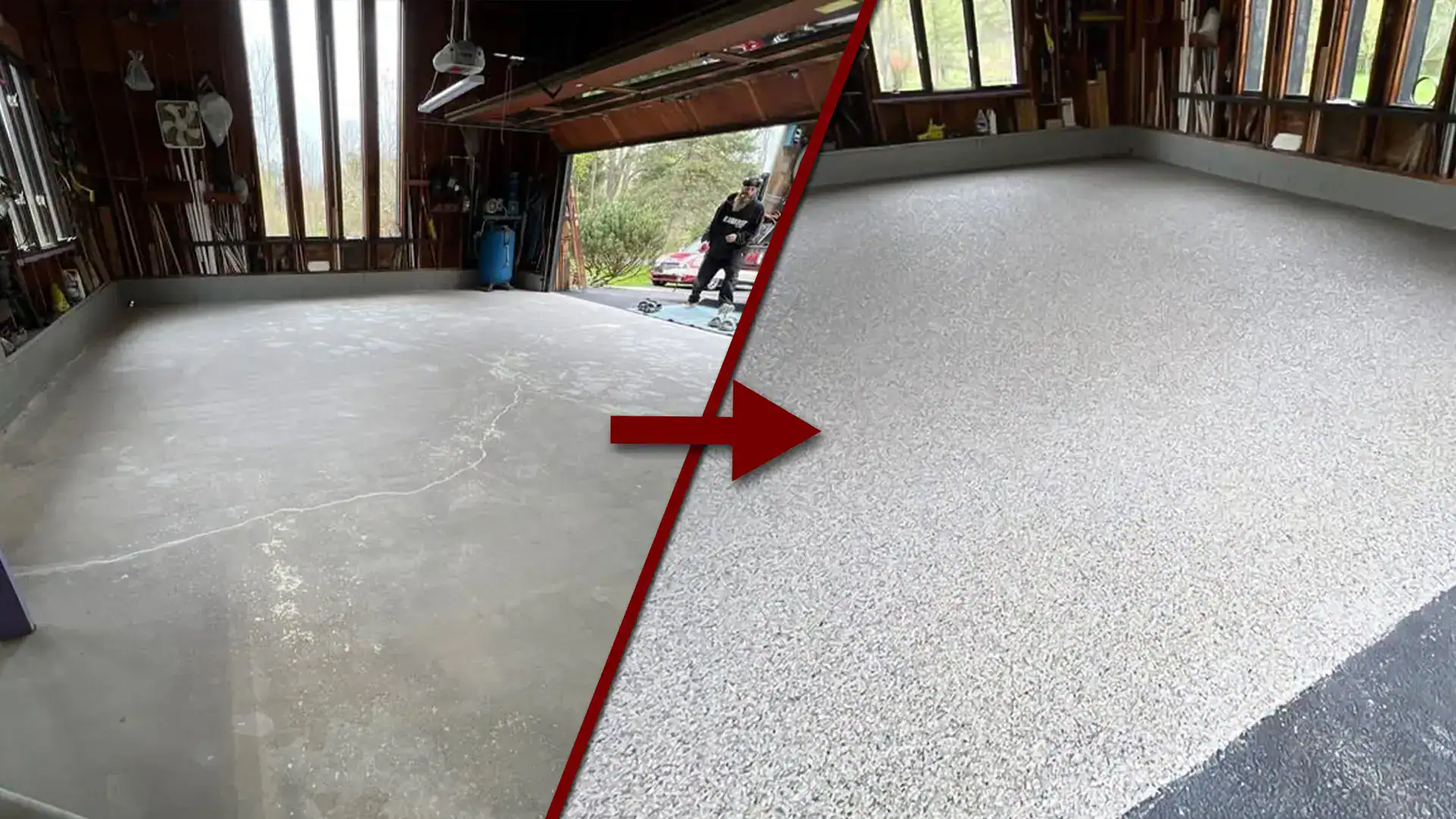
If you’re researching garage floor coatings, you’ve probably come across terms like epoxy, polyurea, and polyaspartic. While many coatings may look similar at first, the materials and installation process can make a major difference in long-term performance. A professionally installed hybrid epoxy and polyurea garage floor coating is designed to provide strong adhesion, better durability, and greater resistance to everyday wear.
Before choosing a coating for your garage, it helps to understand how these materials compare.
Epoxy Alone vs. a Polyurea Garage Floor Coating
Traditional epoxy has been used in garage floors for years because it creates a hard, durable surface. It’s also great for moisture mitigation, which is key to a long-lasting garage floor coating.
However, polyurea also has its benefits. A polyurea is a two-component coating that cures very quickly (it is often used to coat truck beds) and forms a strong bond with various substrates, including concrete.
Homeowners may also hear the term “polyaspartic.” Polyaspartics are a slower-curing version of a pure polyurea…these modified polyureas allow installers more working time during application. (Installers don’t want the coatings to cure mid-installation!). Most coatings marketed as “polyureas” are actually “polyaspartic” coatings.
Polyurea-polyaspartic coating benefits include:
- UV stability that helps prevent yellowing
- Resistance to stains and chemicals
- High abrasion resistance
- Low or no VOCs
- A high-gloss, easy-to-clean finish
These properties make polyurea-polyaspartics excellent clear top coat for use in garage floor coating systems.
The Best of Both Worlds
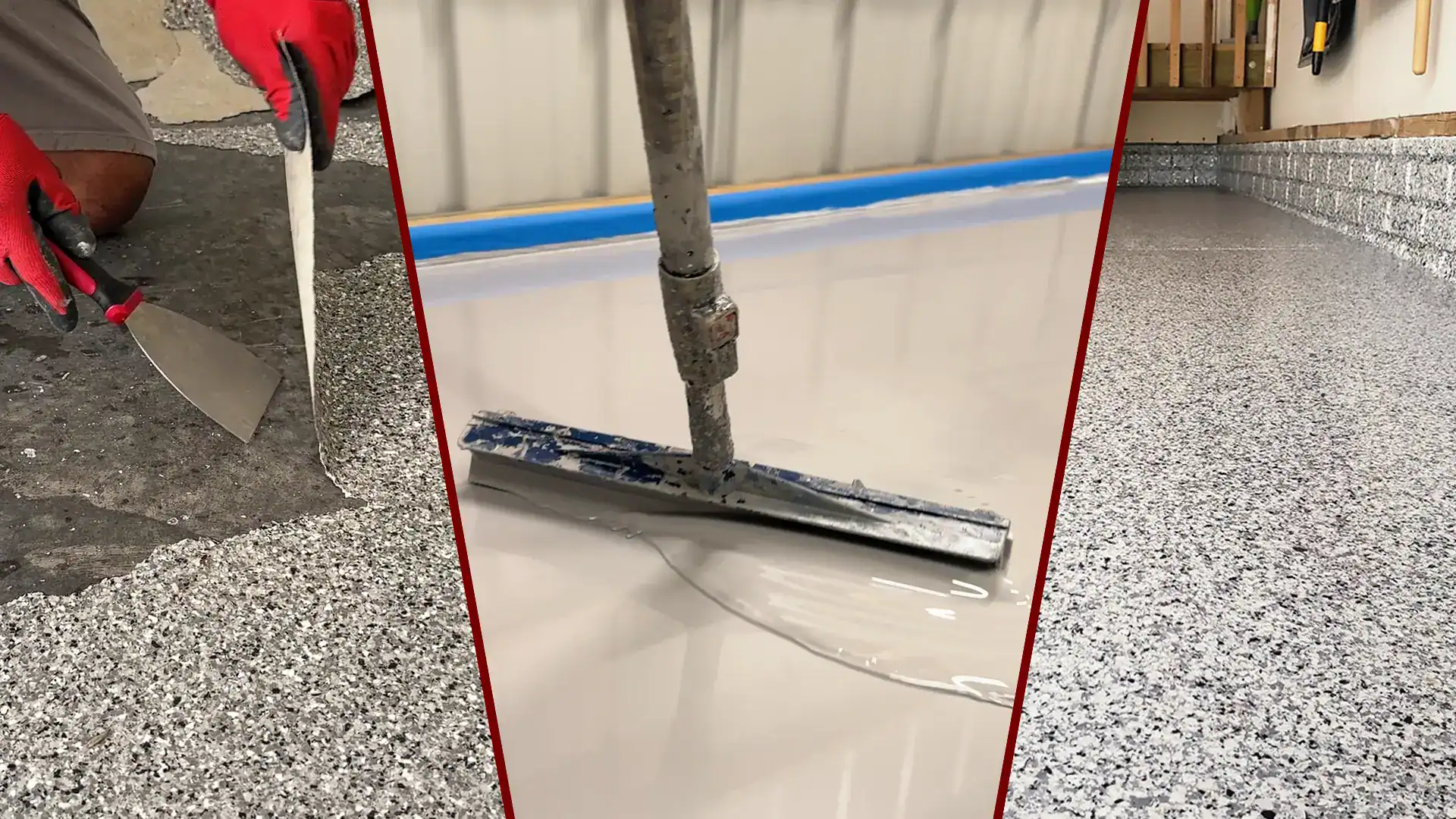
Unfortunately, as good as polyurea-polyaspartics are as clear top coats, they make for lousy direct-to-concrete primer coats. Why? Because polyurea-polyaspartics are not moisture mitigating. They can only be applied thinly and cure so quickly that they fail to deeply penetrate the concrete slab. Thus, they form a wafer-thin layer sitting atop the concrete slab like wallpaper.
As moisture transmits upward through the porous concrete (all concrete has moisture), the moisture vapor gets trapped and creates an upward hydrostatic pressure. The upward pressure on the wafer-thin, poorly-penetrating polyurea-polyaspartic base coat can cause early peeling. Beware the “1-day” system which use a polyurea-polyaspartic as the base layer!
That’s why our 2-day installation process includes a moisture-mitigating epoxy primer. This moisture vapor barrier is crucial! Our systems begin with mechanical grinding to open the concrete pores, followed by a 100%-solids moisture-mitigating epoxy base layer. (This primer cures slowly and deeply penetrates the concrete slab). Next comes a full-broadcast decorative flake layer…and two separate 100%-solids polyaspartic topcoats designed for long-term performance (not just a single coat like the “1-day” systems).
A professionally installed hybrid epoxy and polyurea-polyaspartic garage floor coating is thick, unmatched in durable, and provide long-term protection against all moisture-related issues.
Upgrade Your Garage with a Polyurea Garage Floor Coating
East PA Garage Floor Coating installs premium hybrid epoxy and polyurea-polyaspartic coating systems designed to resist peeling, UV fading, impact, wear…and moisture-related failure. Contact our team today to learn more about installing a hybrid epoxy and polyurea-polyaspartic garage floor coating built for lasting durability.
Frequently Asked Questions
Q: What is the best garage floor coating?
A: The best garage floor coating is a multi-layer system that includes a moisture-mitigating epoxy primer, full broadcast flakes, and polyaspartic topcoats.
Q: How long should a garage floor coating last?
A: A professionally installed system can last decades, while thin coatings may fail within a few years.