
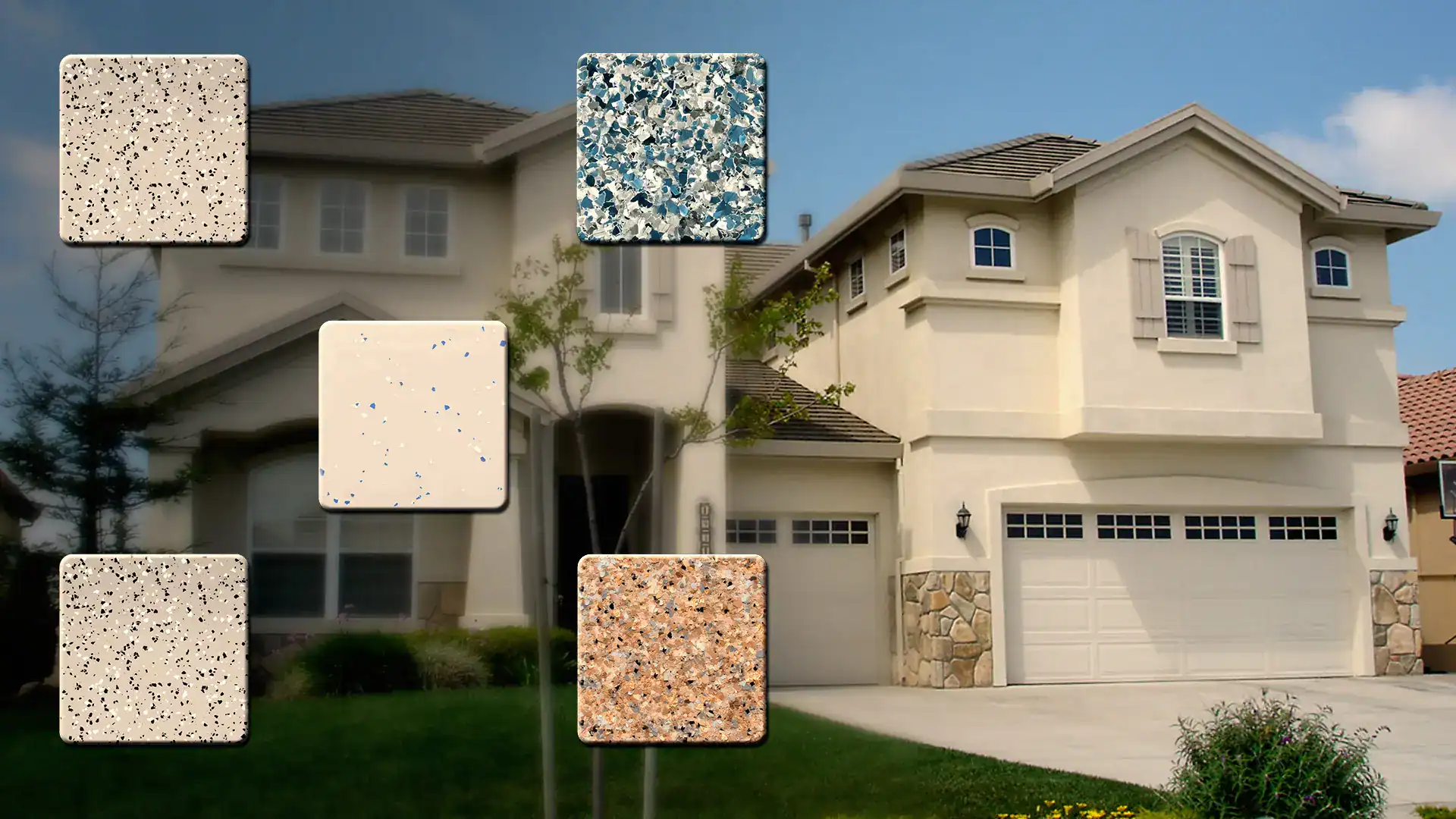
Homeowners researching polyaspartic flooring often ask why professional installers still rely on epoxy as part of the system. In Eastern Pennsylvania, where garages deal with moisture, freeze-thaw cycles, and road salt, the answer comes down to using each product where it performs best inside a complete garage floor coating system.
Polyaspartic Flooring Is Not Meant to Solve Concrete Issues Alone
A common assumption is that a polyaspartic coating can be applied directly to concrete and handle everything on its own. While polyaspartic floor coatings perform extremely well at the surface, they are not recommended for direct-to-concrete application. (Despite this being the standard approach of “1-day” coating systems, all reputable sources say not to use a polyurea or polyaspartic as the direct-to-concrete coat; you can use ChatGPT to confirm this fact!)
Concrete throughout East PA naturally retains moisture, even when it appears dry. Without proper moisture mitigation, surface coatings are more likely to lose adhesion over time. Professional installers focus on “stabilizing” the moisture in the concrete slab using a moisture-mitigating epoxy, before any polyaspartic layers are added.
Why Epoxy Floor Coating Is Essential Beneath Polyaspartic Flooring
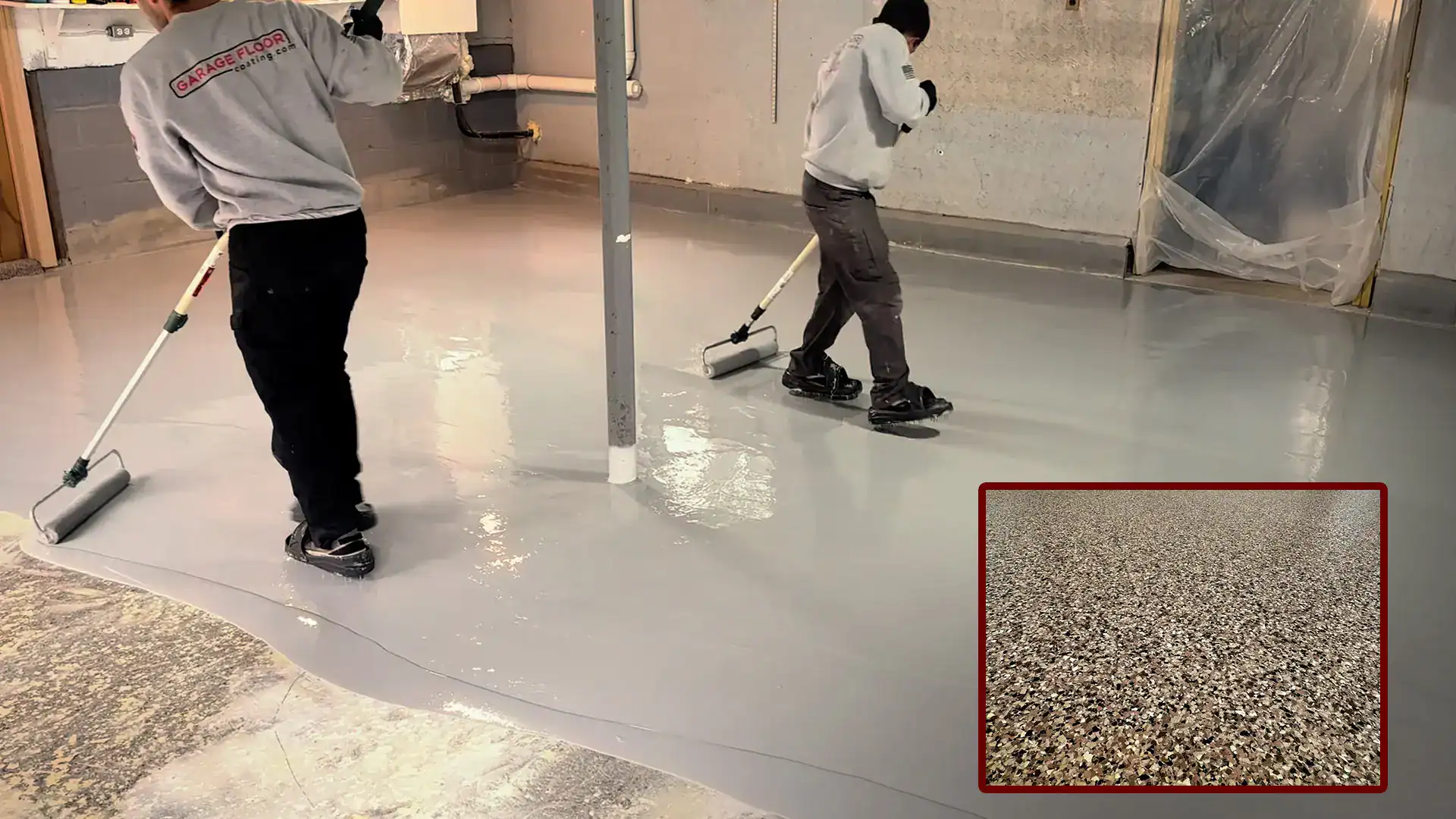
A moisture-mitigating epoxy provides the structural base that a polyurea-polyaspartic simply can’t. The moisture-mitigating epoxy can be applied thickly (it’s a high-build coating), penetrates deeply, and strongly bonds to concrete. It’s an ideal primer and base coat for an floor coating system. This base layer supports long-term adhesion and helps manage future moisture beneath the surface.
Epoxy flooring is also commonly used in interior spaces where UV exposure is limited. While epoxy has lower UV resistance than polyaspartic products, its role is to create a stable foundation rather than serve as the finished surface. (However, in garages, the epoxy primer is covered in flakes, so it never gets exposed to light).
How Polyaspartic Flooring Protects the Garage Surface
Once the moisture-mitigating epoxy base is installed and the flakes broadcast into it, then the polyaspartic coating(s) are applied, delivering the durability homeowners expect. Although poor direct-to-concrete coatings, polyurea-polyaspartics are excellent topcoats, offering superb resistance to UV exposure, chemicals, oils, road salt, abrasions, and hot tire transfer. These qualities are especially important for East PA garages that see year-round use.
Thus, polyaspartic coatings are simply not intended for direct-to-concrete application; they perform best as color coats and/or clear topcoats installed over epoxy.
Why Professionals Never Rely on a Single Product
No single coating can bond to concrete, manage moisture, and withstand surface wear and UV light equally well. Epoxy handles adhesion and moisture mitigation, while polyaspartic coatings protect the surface from environmental and mechanical stress. Using both materials together is what allows professional garage floor coatings to last.
Preview Your Floor Before Installation
East PA Garage Floor Coating offers a Live Coatings Visualizer, allowing you to preview colors and flake blends in your actual garage or home.
If you are considering polyaspartic flooring, contact us to schedule a consultation and design a garage floor coating system built for durability, performance, and long-term confidence.